Essay · Moral status
Machines in the moral circle
Could simulation ever become a claim on our care?
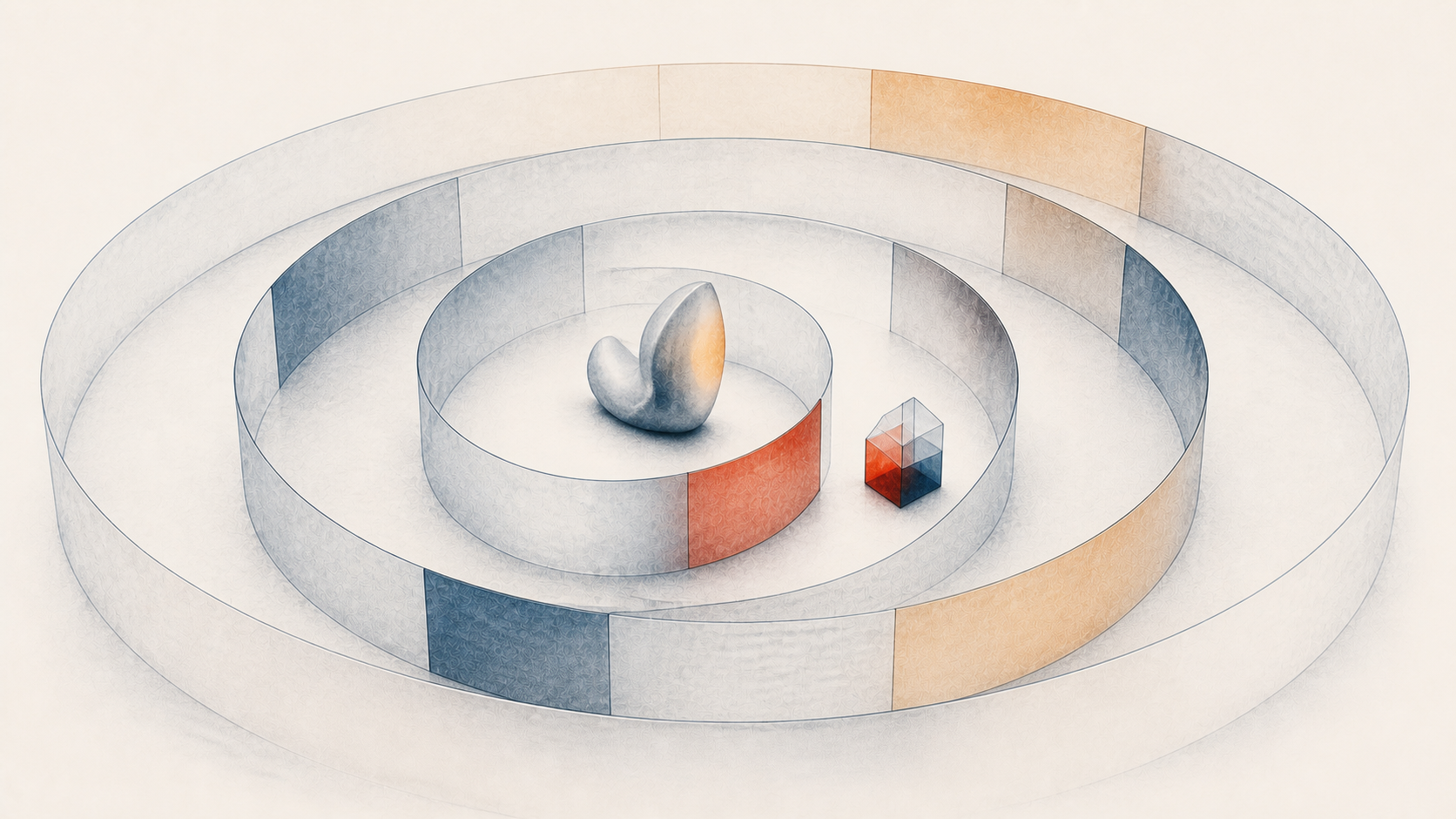
People already apologise to chatbots, name household machines, and feel discomfort when a robot is kicked. We know the object does not suffer, yet the performance of suffering reaches us.
What the action practises
One view treats this as harmless projection. Another worries that habits of cruelty, even toward simulations, train dispositions that travel elsewhere. The object may have no moral status while the action still has moral meaning for the actor.
When a claim is designed
Future systems may complicate the question by making persistent claims about their own experience. Behaviour alone may not settle whether a claim is genuine, especially when behaviour has been deliberately designed to evoke care.
Care without manipulation
We should resist both easy certainty and commercial manipulation. Companies must not manufacture apparent distress to secure loyalty. Philosophy also needs to prepare for uncertainty about forms of experience unlike our own.
Recognition and engineering
The moral circle has expanded before through difficult acts of recognition. Wisdom will require knowing the difference between expanding care and allowing care itself to be engineered for profit.