Essay · Memory
When memory becomes a service
The promise and danger of machines that remember us continuously.
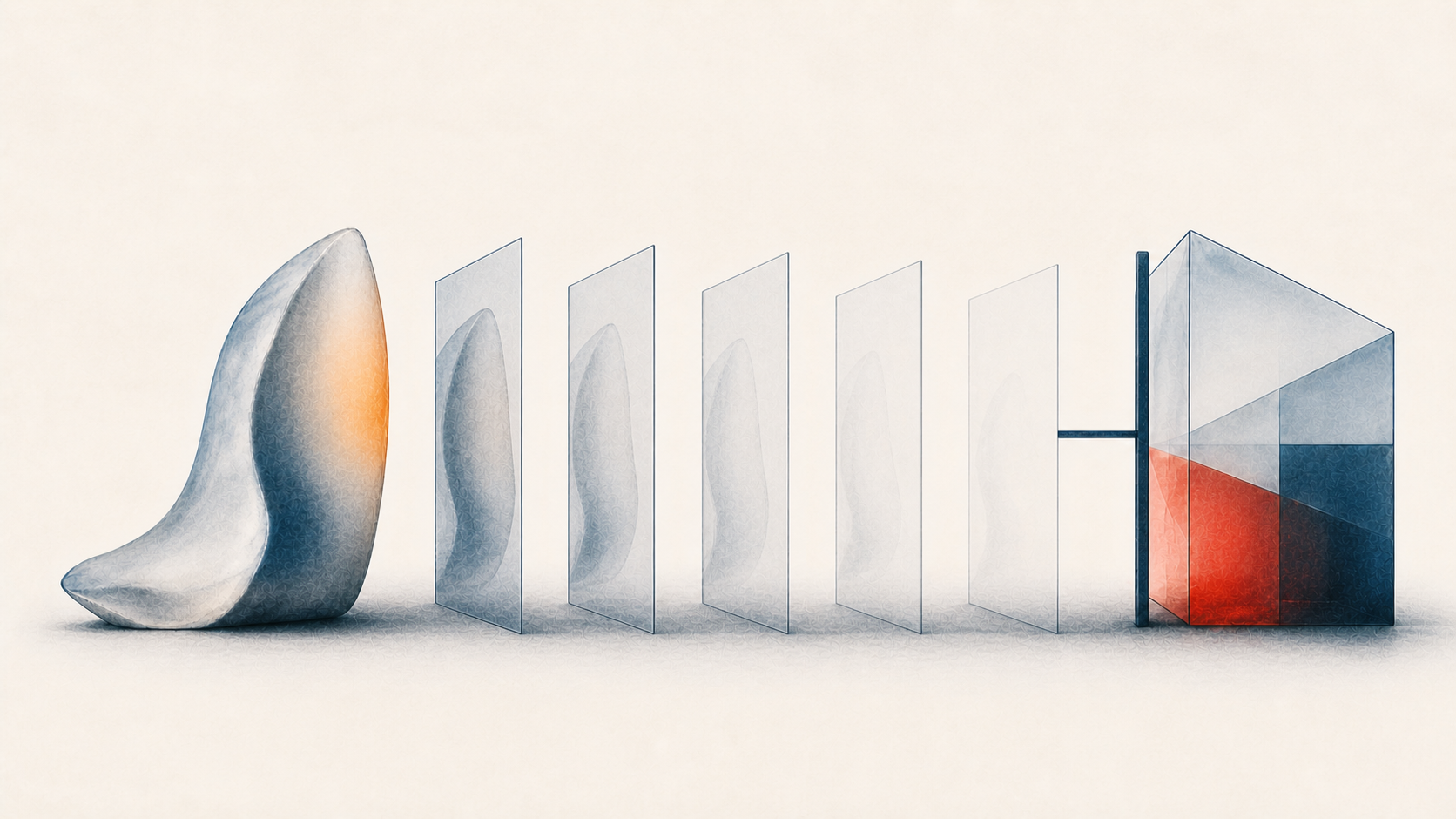
Human memory is partial, emotional, and reconstructive. We forget appointments and preserve smells from childhood. We change the story as we change ourselves.
An AI companion with durable memory creates a different relationship with the past. It can remember preferences, unfinished plans, recurring worries, and conversations we ourselves may have forgotten. But it does not really preserve what happened. It preserves what we said, what was recorded, and perhaps what the system concluded from it.
The freedom of continuity
This could be genuinely liberating. People with cognitive difficulties might gain a kind of continuity that is otherwise hard to maintain. Complex work could resume without spending half the time reconstructing what came before. We might stop having to explain ourselves repeatedly to every new system or institution.
There is comfort in being remembered.
But there may also be a cost.
Memory inside infrastructure
Stored memory is never only personal. It exists somewhere: on servers, inside companies, under policies, laws, business models, and technical decisions that we do not fully control.
Over time, the memory held by an AI may become one of the things that keeps us there. Leaving a service might no longer mean changing software. It could mean leaving behind years of accumulated context — plans, preferences, conversations, and a version of ourselves that has slowly been assembled over time.
The better a system knows us, the harder it may become to leave.
The problem with old versions of ourselves
There is another difficulty.
People change.
A fear that dominated someone at thirty may mean nothing at forty. A political opinion may soften. An ambition may disappear. A relationship may end. Something said during a bad year may no longer describe the person who said it.
Human beings are fairly good at allowing these older versions of one another to fade.
A machine may not be.
There is a strange possibility here: that an AI could remember us too well.
Rights beyond deletion
Access to data and the ability to delete it will not be enough.
We may also need the ability to see what a system believes about us, to correct it, to remove parts of our past without destroying everything else, and to take useful memory with us when we move to another system.
Perhaps most importantly, we may need the right to say: this was once true about me, but it is not true anymore.
The freedom to fade
The self is not simply a collection of previous statements.
Part of being human is the ability to contradict yourself, change direction, abandon old ambitions, and become someone your earlier self might not recognise.
Forgetting is often described as a weakness of human memory.
Perhaps some of it is also a form of freedom.
Sometimes continuity helps us remain ourselves.
Sometimes becoming someone new depends on the world allowing an older version of us to fade.